
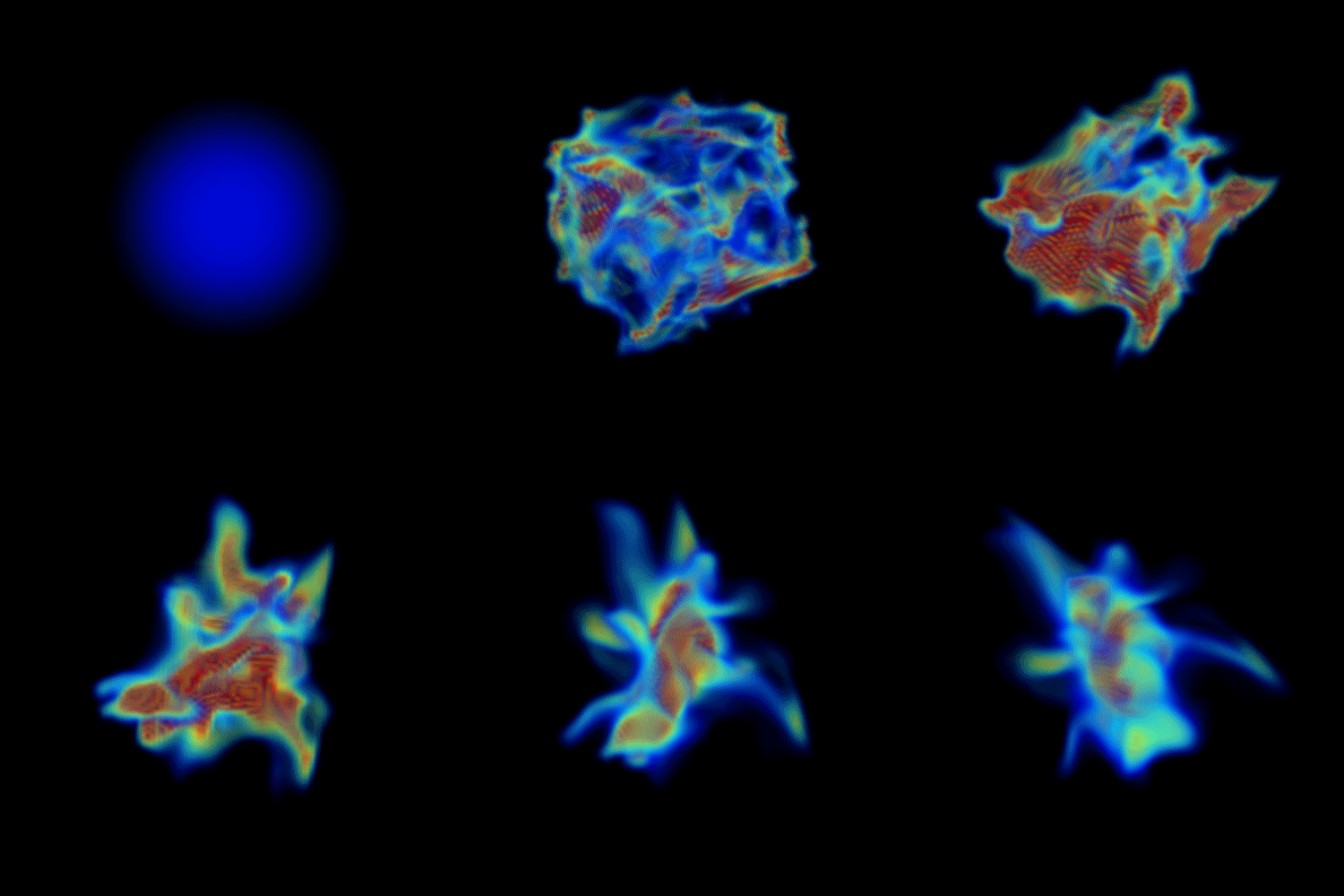
Another turbulent sphere, slightly different turbulence to the last one (don't remember what the difference is, exactly). On the a simple rotation from one particular frame, on the left is a time series. Ends up a bit smoother than the last one, but still does the same basic thing.
The resident FLASH expert thinks that the resolution of the simulations may not be high enough. The turbulent structures are only a few cells wide, so they quickly smooth themselves out. So we'll need to use higher resolution, and it's hard to predict what effect that will have. The smaller cloud (I'll upload that tomorrow), which has higher resolution by default, tears itself apart even though it should be even more tightly gravitationally bound. But the larger cloud is less dense and has a larger surface area, so experiences more resistance from the surrounding gas. Far too many variables to predict what will happen, the only way is to test it.


No comments:
Post a Comment